
“Addressing undernutrition among children, pregnant and lactating women in select blocks of four districts of eastern Uttar Pradesh through community engagement.”Home
Adopting PLA and community engagement.
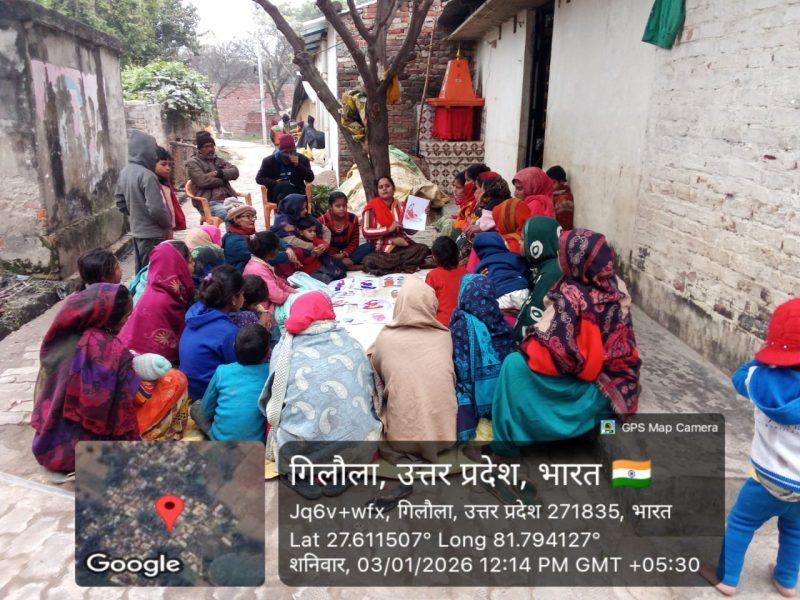
The project- “Addressing Undernutrition among Children, Pregnant and Lactating Women in Select Blocks of Four Districts of Eastern Uttar Pradesh through Community Engagement” is being implemented in Shravasti, Siddharth Nagar, Balrampur, and Ambedkar Nagar districts by consortium partners Grameen Development Services (GDS), SATHI, and PANI respectively. These districts represent some of the most underdeveloped and nutritionally vulnerable areas of the state, with high rates of child stunting, wasting, and anemia, particularly among marginalized communities.
GDS is leading the implementation in Shravasti, focusing on two blocks—Sirsiya and Gilaula—covering 373 Anganwadi Centres (AWCs) out of 437 sanctioned. The district, designated as an Aspirational District by NITI Aayog, has a population of over 1.1 million and faces chronic challenges including poor health infrastructure, low literacy rates, and poverty. The situation is particularly severe in terms of nutrition:
- 50% of children under five are stunted
- 30% are wasted
- 41% are underweight
- 61.2% of children (06–59 months) are anemic
- 44.6% of women of reproductive age are anemic
Despite the presence of schemes like ICDS and NHM, service coverage and quality remain inadequate. Many AWCs lack boundary walls, electricity, and proper weighing equipment.
Project Objectives and Strategy
The project adopts a dual approach of community engagement and system strengthening to improve maternal and child nutrition outcomes. It targets pregnant and lactating women, children under five, and high-risk families through structured home visits, community-based events, and behaviour change communication.
Key interventions include:
- Monthly prioritized home visits to high-risk households (e.g.- SAM / MAM children, High risk pregnancy (HRP) women)
- Supportive supervision of VHSND sessions, ensuring delivery of ANC services, nutrition supplies (IFA, calcium, Vitamin A), and screening for malnutrition
- Community-level events like Annaprasan Diwas and World Breastfeeding Week to promote complementary feeding and MIYCN practices
- Growth Monitoring and Promotion (GMP) activities to refer at-risk children and support NRC linkage
- Formation of AAA meetings to strengthen collaboration among FLWs (ASHA, ANM, AWW)
The cornerstone of the community engagement approach is the Participatory Learning Approach (PLA) platform. Each Field Coordinator will conduct 10–12 PLA meetings monthly in AWC catchments, reaching approximately 700 community members. These meetings will provide a space for collective problem-solving and building awareness on maternal, infant and young child nutrition (MIYCN), dietary diversity, exclusive breastfeeding and handwashing practices.
HomeUnder system engagement and monitoring, the project actively engages with district and block-level platforms such as the District Nutrition Committee (DNC) to advocate for improved convergence, data use and service quality. The project team is expected to provide technical support and coordinate with AWWs in ensuring e-KYC and FRS compliance on the Poshan Tracker and contribute to improved data coordination with platforms like e-Kavach.
Ensuring community trust-building, and structured outreach activities with the mainstream frontline workers would be the on-going process of the project. Community members—especially women—will participate in the awareness sessions and access the services more proactively. There is early evidence of improved collaboration among mainstream FLWs and better monitoring of high-risk groups.
The project aims to further strengthen team capacity through training, exposure visits, and use of community dashboards to support adaptive planning. The focus remains on ensuring that marginalized households receive timely and quality health and nutrition services through an inclusive, community-led approach.
The project will deepen its focus on:
- Sensitization of mainstream frontline workers
- Strengthening behaviour change strategies through PLA
- Improving data systems (MIS) and field-level supervision
- Enhancing convergence with health and ICDS departments
With sustained efforts and community participation, the initiative aims to reduce child wasting by 6–10% and improve dietary diversity by 20% over the project period.